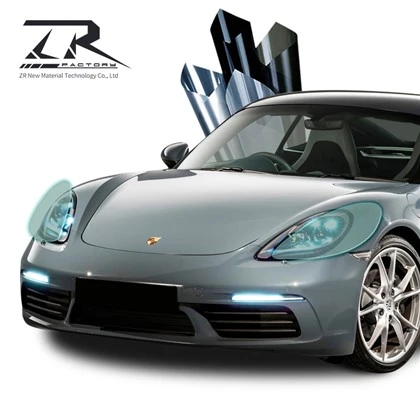


Yo, what's up everyone! I'm a supplier of Car Window Solar Film Tint, and today I wanna chat about how this awesome stuff can reduce energy consumption in cars.
First off, let's talk about the heat situation inside a car. You know how on a sunny day, when you get into your car, it's like stepping into an oven? That's because sunlight, especially the infrared (IR) and ultraviolet (UV) rays, can really heat up the interior. The glass in car windows doesn't do much to block these rays on its own. That's where our Car Window Solar Film Tint comes in.
Our solar film is designed to block a significant amount of IR and UV rays. IR rays are the ones that carry heat. When the film blocks these rays, it stops a large portion of the heat from entering the car. This means that the interior of the car doesn't heat up as much as it would without the film.
Let's think about the air - conditioning system in the car. The AC is one of the biggest energy consumers in a vehicle. When the car gets super hot inside, the AC has to work overtime to cool it down. It has to pump out a ton of cold air, which uses a lot of fuel (if it's a gas - powered car) or drains the battery (if it's an electric car).
But when you have our Car Window Solar Film Tint on your windows, the AC doesn't have to work as hard. Since the interior doesn't heat up as much, the AC can maintain a comfortable temperature with less effort. For example, in a gas - powered car, the engine doesn't have to use as much fuel to run the AC. This directly leads to better fuel efficiency and less energy consumption.
In an electric car, the battery life is a crucial factor. Running the AC at full blast can quickly drain the battery, reducing the car's range. With our solar film, the AC uses less power, which means the battery lasts longer. You can drive more miles on a single charge, which is a huge plus for electric car owners.
Another aspect is the visible light. Our solar film also reduces the amount of visible light that enters the car. This might not seem like a big deal in terms of energy consumption at first, but it actually has an impact. Less visible light means less glare inside the car. When there's less glare, you don't have to strain your eyes as much while driving. And in some cases, you might not need to use the interior lights as often, especially during the day. This also saves a bit of energy.
Now, let's talk about the long - term benefits. Over time, the energy savings really add up. If you calculate the amount of fuel or electricity saved over the life of a car, it can be a significant amount. Not to mention, it's also better for the environment. Less energy consumption means fewer emissions (in the case of gas - powered cars), which is a win - win situation.
We also offer different types of Car Window Solar Film Tint to suit different needs. Whether you want a darker tint for more privacy or a lighter one that still provides good heat protection, we've got you covered.
And if you're interested in other car protection products, we've got some great options too. Check out our Self - healing Car Film, which can protect your car's paint from scratches and minor damages. Our Whole Car Paint Protection Film is perfect for those who want to give their entire car a high - level of protection. And for more self - healing goodness, take a look at our Self Healing Protective Film for Cars.
If you're thinking about reducing energy consumption in your car and getting the benefits of our Car Window Solar Film Tint, don't hesitate to reach out. We're here to answer any questions you might have and help you choose the right film for your vehicle. Whether you're a car owner looking to save some money on fuel or an auto dealer interested in offering our products to your customers, we're ready to have a chat and work something out.
In conclusion, Car Window Solar Film Tint is a simple yet effective way to reduce energy consumption in cars. It not only saves you money but also helps the environment. So, why wait? Let's start this energy - saving journey together.
References:
- "Automotive Air Conditioning Systems and Their Impact on Fuel Economy" - Journal of Automotive Engineering
- "The Effect of Solar Radiation on Vehicle Interior Temperature and Air Conditioning Energy Consumption" - International Journal of Energy Research