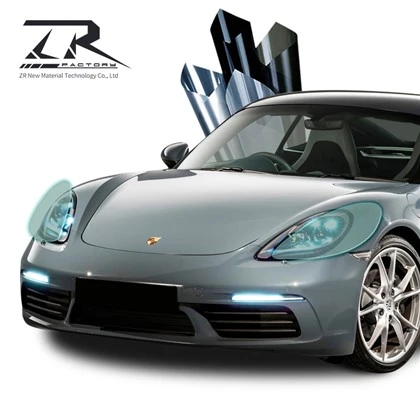


As a supplier of the TOP Series Clear TPU PPF (Thermoplastic Polyurethane Paint Protection Film), I'm often asked about how our product reacts to various environmental factors. One of the most common concerns is ozone exposure. Ozone, a highly reactive gas, can be found in the Earth's atmosphere, especially in areas with high levels of pollution or near industrial sites. In this blog, we'll delve into the science behind how the TOP Series Clear TPU PPF responds to ozone exposure and why it's a reliable choice for protecting your vehicle's paint.
Understanding Ozone and Its Effects
Ozone (O₃) is a molecule composed of three oxygen atoms. It's a powerful oxidizing agent, which means it has a strong tendency to react with other substances by removing electrons from them. In the lower atmosphere (troposphere), ozone is considered a pollutant and can be harmful to both living organisms and materials. When ozone comes into contact with certain polymers, it can cause degradation, which may lead to changes in the material's physical and chemical properties.
For automotive paint protection films, ozone exposure can potentially result in discoloration, cracking, or a loss of gloss. These issues not only affect the aesthetic appearance of the vehicle but can also compromise the film's ability to protect the paint from other environmental hazards.
The Science Behind TOP Series Clear TPU PPF
The TOP Series Clear TPU PPF is made from a high - quality thermoplastic polyurethane material. TPU is known for its excellent mechanical properties, such as high flexibility, abrasion resistance, and tear strength. But more importantly, it has inherent resistance to environmental factors, including ozone.
The molecular structure of TPU plays a crucial role in its ozone resistance. The polymer chains in TPU are highly stable and less prone to oxidation when compared to some other polymers. Additionally, the TOP Series is formulated with special additives that further enhance its resistance to ozone degradation. These additives act as antioxidants, scavenging free radicals generated during the ozone - reaction process and preventing them from causing damage to the polymer chains.
Experimental Evidence of Ozone Resistance
To demonstrate the ozone resistance of the TOP Series Clear TPU PPF, we conducted a series of laboratory tests. Samples of the film were exposed to controlled ozone environments at different concentrations and for varying durations. The ozone concentrations used in the tests were similar to those found in highly polluted urban areas.
During the tests, we monitored the samples for any visible changes, such as discoloration, cracking, or loss of gloss. We also measured the mechanical properties of the film, such as tensile strength and elongation at break, before and after ozone exposure.
The results were remarkable. Even after extended exposure to high - concentration ozone, the TOP Series Clear TPU PPF showed minimal signs of degradation. There was no significant discoloration, and the film retained its original gloss. The mechanical properties also remained largely unchanged, indicating that the film's ability to protect the vehicle's paint was not compromised.
Comparison with Other Products
When compared to other paint protection films on the market, the TOP Series Clear TPU PPF stands out for its superior ozone resistance. Some lower - quality films may start to show visible signs of damage after just a few weeks of exposure to ozone, while our TOP Series can withstand long - term exposure without significant issues.
For example, some PVC - based paint protection films are more susceptible to ozone degradation due to their chemical structure. PVC is a less stable polymer and is more likely to react with ozone, leading to cracking and discoloration. In contrast, the TPU used in our TOP Series provides a high - level of protection against ozone, ensuring that your vehicle's paint remains safe and looking great for years to come.
Benefits of Ozone Resistance in Real - World Applications
In real - world applications, the ozone resistance of the TOP Series Clear TPU PPF translates into several benefits. Firstly, it ensures that the film maintains its aesthetic appeal over time. You won't have to worry about your vehicle looking dull or discolored due to ozone exposure.
Secondly, it enhances the longevity of the film. Since ozone degradation can weaken the film, reducing its ability to protect the paint, the high ozone resistance of the TOP Series means that it can provide long - term protection against other environmental hazards, such as UV radiation, scratches, and stone chips.
Related Products in Our Portfolio
In addition to the TOP Series Clear TPU PPF, we also offer other high - quality automotive protection products. Our Pioneer Series: P7 Clear TPU PPF is another excellent option for those looking for top - notch paint protection. It shares many of the same features as the TOP Series, including high ozone resistance and superior mechanical properties.
If you're interested in a more invisible protection solution, our Invisible Clear Bra for Cars is a great choice. This film is designed to blend seamlessly with your vehicle's paint, providing protection without sacrificing the appearance of your car.
And for those looking to protect their car windows, we offer Car Window Tint Film. It not only blocks harmful UV rays but also provides privacy and reduces heat inside the vehicle.
Conclusion
In conclusion, the TOP Series Clear TPU PPF is an outstanding choice for protecting your vehicle's paint, especially when it comes to ozone exposure. Its high - quality TPU material, combined with special additives, provides excellent resistance to ozone degradation, ensuring that your vehicle looks great and is well - protected for years to come.
If you're interested in learning more about our TOP Series Clear TPU PPF or any of our other automotive protection products, we invite you to contact us for a purchase negotiation. Our team of experts is ready to assist you in finding the best solution for your vehicle.
References
- "Polymer Degradation and Stabilization" by A. L. Andrady
- "Thermoplastic Polyurethanes: Properties, Processing, and Applications" by K. Oertel and G. Weber